High Weight Low Reps: Build Muscle & Strength Faster (2026)
Whether you are a beginner or a professional, strength training is what actually changes your body. And the question I get asked more than any other in my 9+ years of training people is this: should I lift heavy weights for low reps, or light weights for high reps?
I updated this article for 2026 because the science has moved on since I first wrote it, and honestly, so has my own coaching. Let’s break down what high weight low reps really does, what the latest research says, and whether it’s the right approach for YOUR goal.

In this article, we will explore what exactly this approach is, its scientifically proven benefits, how to start doing it easily and safely, and whether it’s the right choice for you.
What is the High Weight Low Reps Approach?
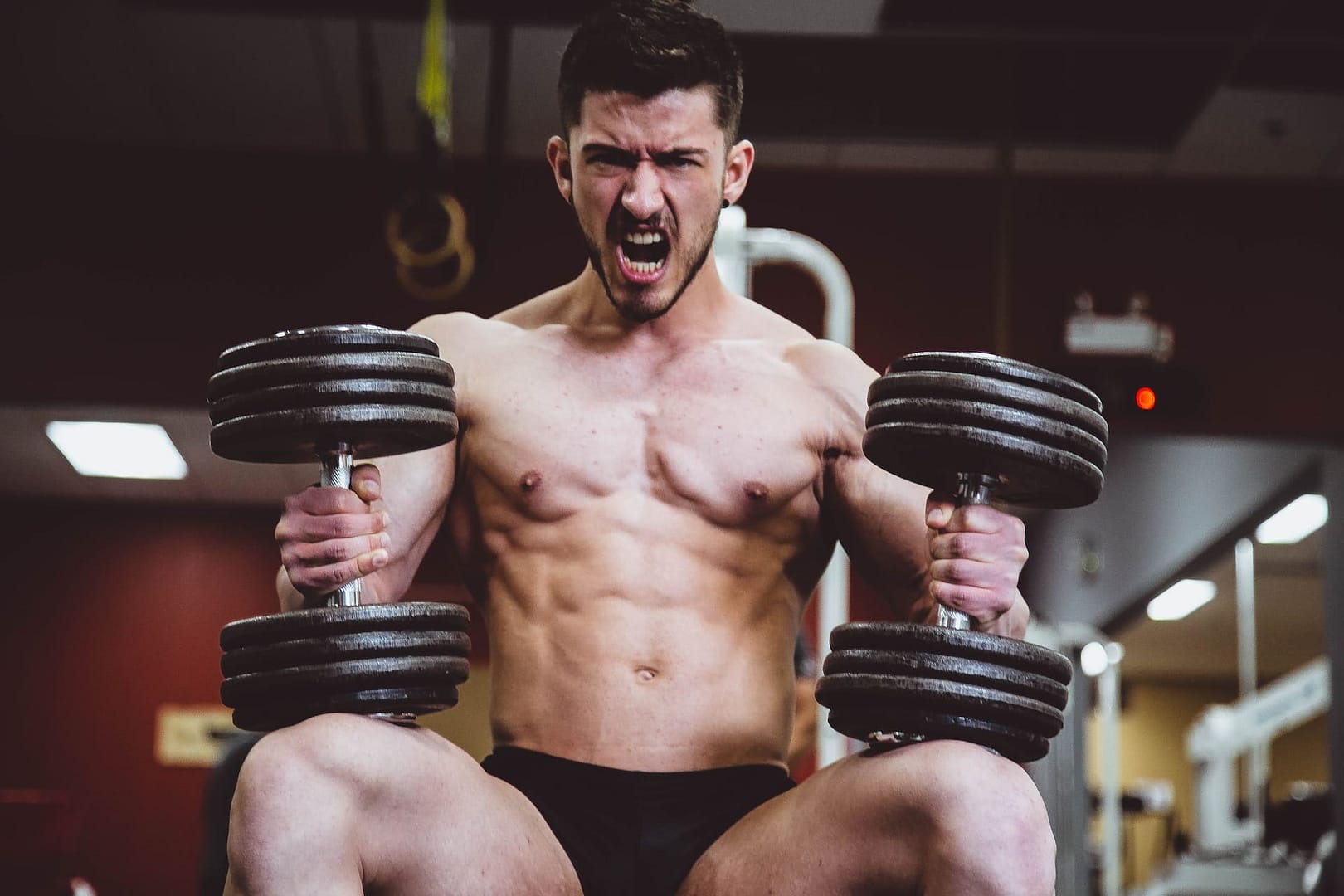
High weight low reps is a traditional type of strength training majorly used in the bodybuilding world. This involves lifting a heavy weight, for a low number of repetitions.
The basic agenda behind this approach is based on the principle that more weight you lift, the more stress you put on your muscles. This stress will help your body to reach metabolic stress levels. Which in return increases the metabolism rate and releases growth hormones. So, the more stress you put your muscles through, the more they will grow and the stronger you will become.
With this approach, you typically lift a weight that is at least 70% of your one-rep max (the maximum amount of weight you can lift for one repetition). You then perform a low number of reps, usually between 1 and 6, before taking a break and repeating the set.
Heavy Weight Low Reps Benefits: Scientifically Proven
There are numerous scientifically proven benefits of heavy weight low reps training, including:
1. Increased muscle strength
The main approach deriving this training method is to help you build muscle strength more quickly and effectively than other training methods by putting them under more stress.

Reference: https://pubmed.ncbi.nlm.nih.gov/25853914/
2. Improved muscle endurance
Although you perform fewer reps with heavier weights, this approach can still help improve your muscle endurance over time. However, not as quick as the low weight high reps training approach.
3. Higher calorie burn
When you are lifting heavy weights, you are putting a lot of stress on the targeted muscles. Which in return burns more calories than lifting lighter weights for high reps.
4. Better bone density
As per the many research, When you lift heavy loads, It helps your body stimulate bone growth and improve bone density. Which helps reduce the risk of bone related diseases like osteoporosis, osteopenia, and even bone fracture.
5. Increased testosterone production
Lifting heavy weights can help boost testosterone levels, which can improve muscle growth and aid in fat loss.
How to get started with high weight low reps: Easy and Practical way
While high weight low reps training can be highly effective, it can also increase your risk of injury if not done safely. Here are some easy and practical tips to help you perform this training approach safely:
1. Warm up properly
If you are a beginner or even if you are a pro. Before starting your high weight low reps workout, make sure you warm up your muscles and joints with some light cardio and stretching. You can do some treadmill walks or cycling for 5-10 minutes.

2. Use proper form
Proper form is crucial when lifting heavy weights. Make sure you use the correct technique and keep your back straight and your core engaged.
For a detailed article check, How to get a perfect form in the gym.
3. Increase weight gradually
Don’t get intimidated by those bulky people who are lifting crazy weights and jump straight into lifting your maximum weight. Those also have started gradually. So, Gradually increase the weight load to prevent injury.
4. Rest between sets
Lifting heavy weights is very exhausting to the body. Take breaks between sets to allow your muscles to recover and prevent fatigue.
5. Listen to your body
You must have heard people saying “No Pain, No Gain”. But remember Not all pain results in gains. If you feel pain or discomfort, especially in joints, stop immediately and seek medical advice.

What the Latest Research Actually Says (2026 Update)
When I first wrote this article, the common belief was simple: heavy weight = size and strength, light weight = endurance. The newer research made this more interesting.
Multiple recent studies comparing rep ranges found that for pure muscle SIZE, both heavy-low-rep and light-high-rep training build a similar amount of muscle, as long as you take your sets close to failure. The muscle doesn’t count the kilos, it counts the effort.
But, and this is the important part, for STRENGTH, heavy weight low reps is still clearly the winner. Lifting heavy teaches your nervous system to produce force. No amount of light pump work replaces that.
So my updated coaching advice is this: if you are a skinny guy or beginner trying to get bigger and stronger at the same time (which is most of you reading this), heavy compound lifts in the 4-6 rep range should be the base of your program, with some higher rep work sprinkled on top. That combination gives you both adaptations.
High Weight Low Reps vs Less Weight More Reps: Which Should You Do?
Both approaches work. The honest answer is that the best one depends on your goal, your joints, and your experience level.
Choose high weight low reps if your main goal is building maximum strength and muscle mass, you have healthy joints, and you can maintain proper form under a heavy bar. This is the approach almost every great bodybuilder and powerlifter has built their base with.
Choose lighter weights with more reps if you are brand new to the gym, recovering from a joint issue, training at home with limited weights, or your goal is endurance and conditioning more than raw size. I’ve written a complete guide on that approach here: Less Weight More Reps: Is It the Best Way to Build Muscle?
And remember, you don’t have to marry one method. My own training, and what I program for most clients, uses heavy low-rep work for the big lifts (squat, deadlift, bench) and higher reps for smaller muscles and finishing exercises.
“It’s not about how much you lift, it’s about how much you look like you lift.”
Arnold Schwarzenegger
Is high weight low reps the right choice for you?
High weight low reps approach may be more suitable for those who are looking to build strength and increase muscle mass, rather than those who are focusing solely on endurance or weight loss. As with any exercise routine, it’s important to consider your personal fitness goals and current fitness level before starting a high weight low reps training program.
It’s also important to approach this type of training with caution and proper technique, to avoid injury. Start with lighter weights and gradually increase the weight as you become more comfortable and confident with the movement.
How Long Can it Take to Show Results?
The results of high weight low reps training can completely vary depending on your fitness level, body type, daily diet, training intensity, and your goal. However, you can typically see noticeable results within four to six weeks of consistent training. Remember consistency is the key.
Table of details
Here’s a table summarizing the key points discussed in this post:
| Subheading | Key Points |
| What is heavy weight and low reps approach | High weight low reps training involves lifting heavier weights for fewer reps. |
| Heavy weight low reps scientifically proven benefits | Benefits of high weight low reps training include increased strength, muscle mass, and hormone production. |
| Easy and practical tips (How to do high weight low reps training safely without getting injured) | Always use proper form, start with lighter weights, and gradually increase weight over time. |
| How long can it take to show results? | Results may vary, but it’s important to stick with a consistent training routine for several weeks or months to see progress. |
| Should you do this as a beginner? | It’s important to consider your fitness goals and current fitness level before starting a high weight low reps training program. |
| Is it better than low weight high reps? | Both approaches have their benefits, and it ultimately depends on your personal fitness goals. |
Conclusion
High weight low reps training can be an effective way to build strength and increase muscle mass. A lot of great bodybuilders like Arnold and Ronnie Coleman have used this technique to gain muscles more effectively and efficiently. By lifting heavier weights for fewer reps, you can stimulate muscle growth and increase hormone production.
However, Safety is the priority. It’s important to approach this type of training with caution and proper technique to avoid injury. With consistency and dedication, high weight low reps training can be a valuable addition to any fitness routine.
FAQ
Q1. Does high weight low reps build muscle?
Yes. Heavy training close to failure is a proven way to build muscle, and it builds strength faster than any other rep range. For maximum size, combine it with enough total sets (10+ per muscle per week) and enough protein.
Q2. Is more weight less reps better than more reps with less weight?
For strength, yes, heavier is better. For muscle size, research shows both build similar muscle if you train close to failure. For endurance and joint comfort, lighter and more reps wins. Match the method to your goal.
Q3. Should I increase weight or reps first?
Both are progressive overload. My rule for clients: when you can complete all your target reps with good form on two workouts in a row, add weight. If adding weight breaks your form, add a rep instead.
Q4. What are the main high weight low reps benefits?
Faster strength gain, efficient muscle building, stronger bones, more testosterone and growth hormone release, and a higher calorie burn per set than light training.
Q5. Is low rep heavy training good for beginners?
Yes, with one condition: learn the movement with light weight FIRST. I never let a new client go heavy until their form is solid for 2-3 weeks. After that, heavy compound lifts are the fastest way for a beginner to build a base.
Q6. What does a high weight low reps workout plan look like?
Simple version: 3-4 compound lifts per session, 3-5 sets of 4-6 reps at roughly 75-85% of your max, 2-3 minutes rest between sets, 3-4 sessions per week. Progress the weight slowly and consistently.
If you find anything useful, consider sharing and following us on our social groups (Facebook, Telegram, and Instagram) to be a part of a healthy community.
For any suggestions and questions, you can contact us directly or Comment below. You will surely receive a reply to every question and we actively look at every suggestion.


I do believe all the ideas youve presented for your post They are really convincing and will certainly work Nonetheless the posts are too short for novices May just you please lengthen them a little from subsequent time Thanks for the post